Field marks
- 01Pink-to-red side band
- 02Black spots on back and tail
- 03Streamlined body with an adipose fin

Freshwater · Cold-water lakes and streams
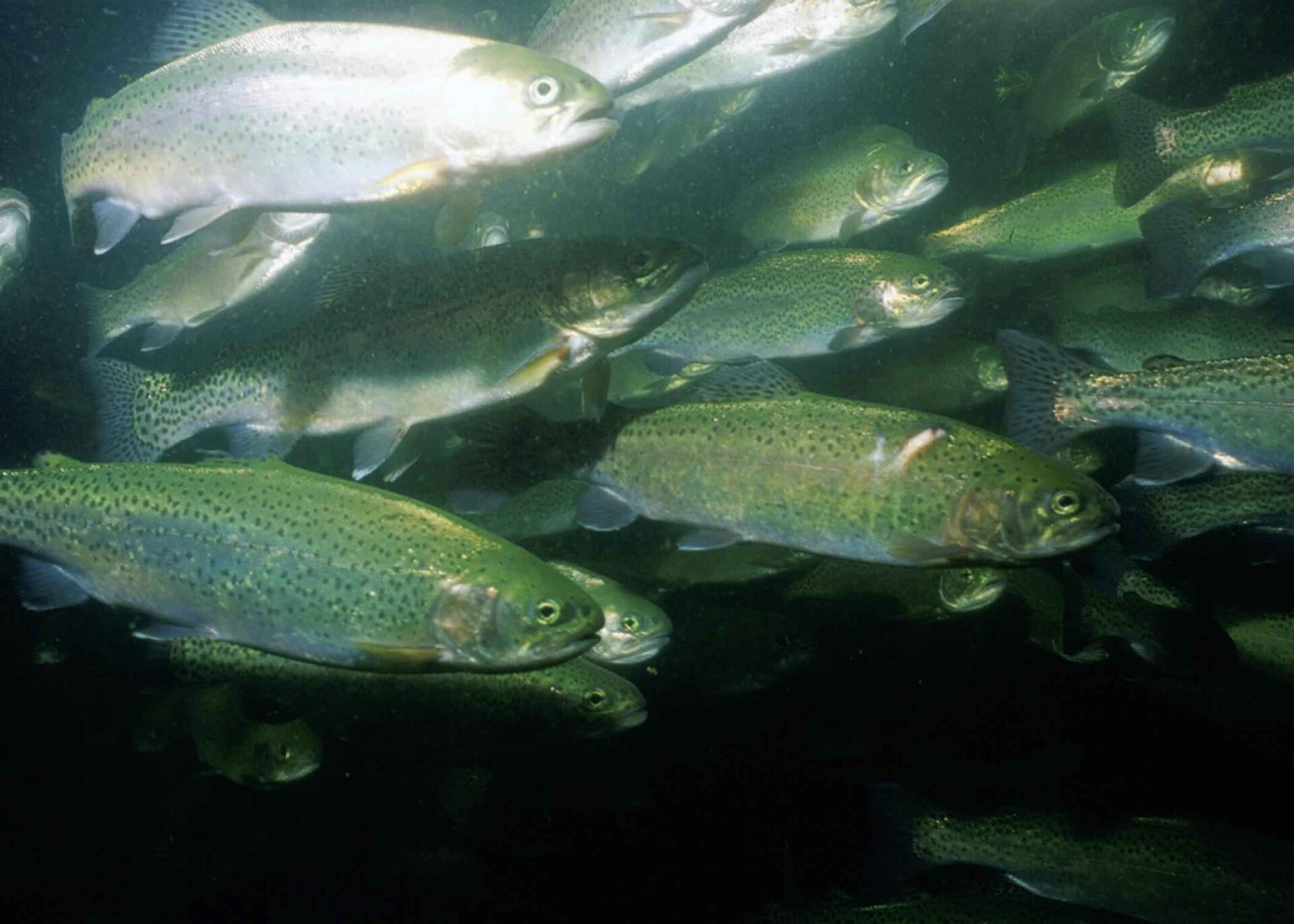
Use multiple physical markers together. Color alone is unreliable after capture and varies with light, age, stress, and habitat.
Typically shows colored slash marks beneath the jaw.
Tail spotting, gum color, parr marks, and local range require careful comparison.
Cool streams, lake inlets, drop-offs, oxygen-rich seams, and thermocline edges.
Cool months broadly favor low-elevation trout; high-country seasons and stocking schedules differ.
General California planning pattern. Conditions, migration, stocking, closures, and exact water can override it.
Temperature-sensitive predator that shifts depth to maintain oxygen and intercept insects or baitfish.
Aquatic insects, minnows, eggs, crustaceans, and terrestrial insects.
Small spoon, spinner, jerkbait, fly, or micro jig.
Nightcrawler, salmon egg, or legal prepared bait.
Cover the upper column during cool low light
Track the thermocline as surface water warms
Drift natural bait through current seams
Reel Fishing Society intentionally does not hard-code possession limits here. Rules can change by date, species, exact water, management area, depth, gear, method, emergency action, or protected-area boundary.