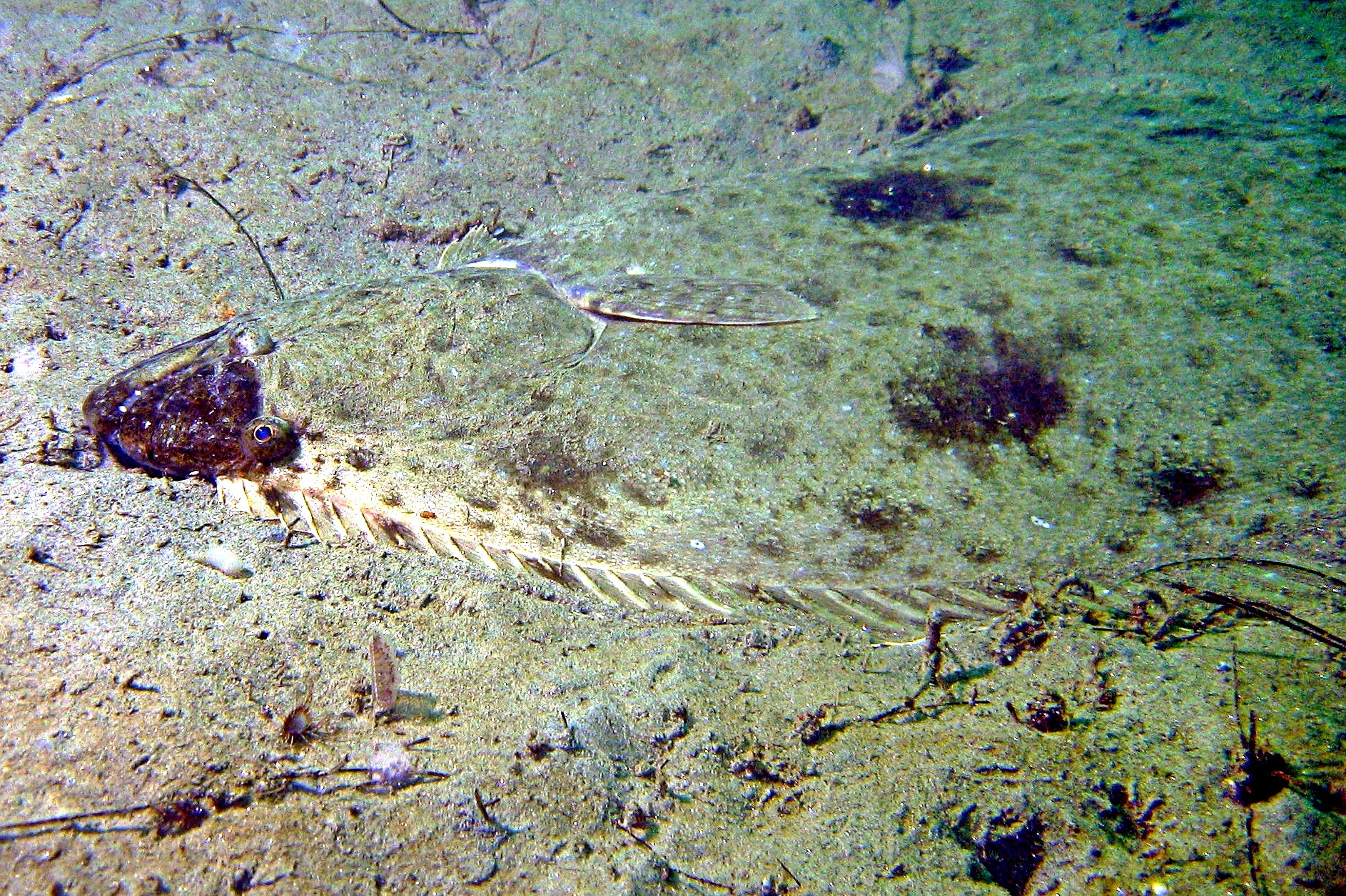
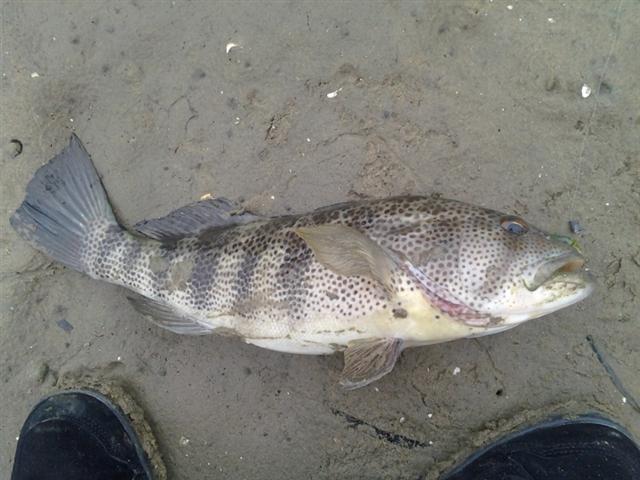
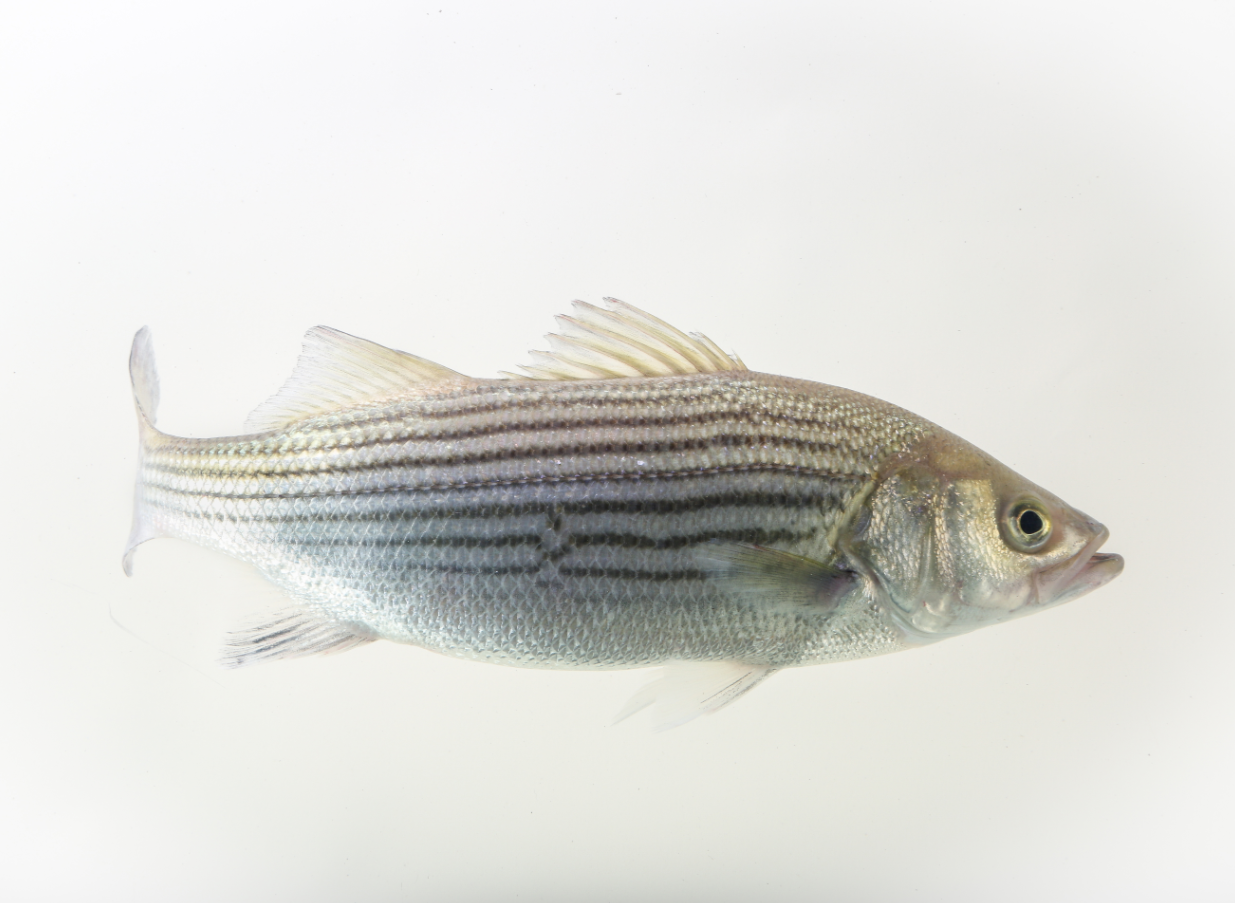
Field marks
- 01Olive-brown body with pale rectangular blotches
- 02Large mouth and stout body
- 03Rounded tail with mottled fins

Saltwater · Pacific kelp coast
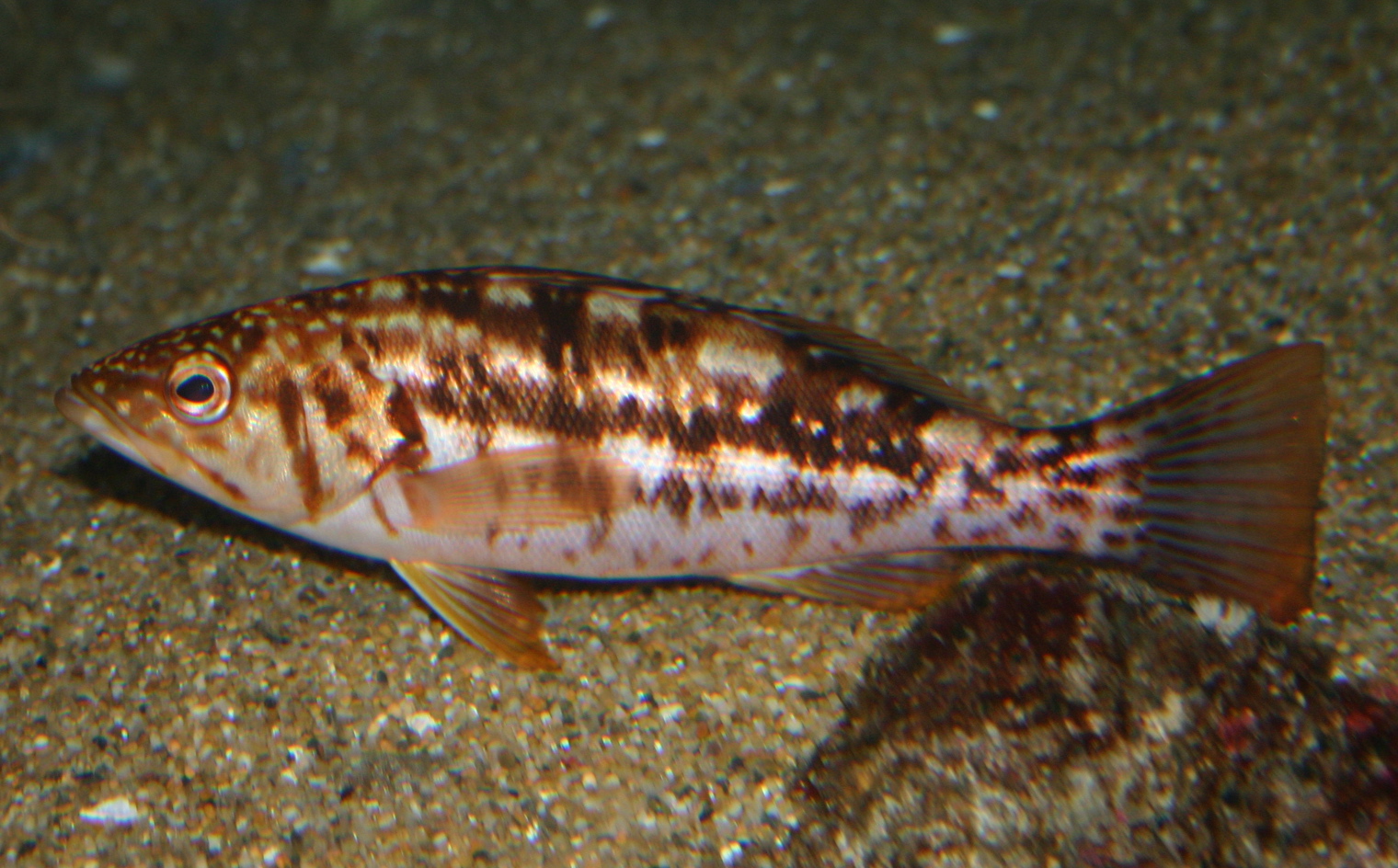
Use multiple physical markers together. Color alone is unreliable after capture and varies with light, age, stress, and habitat.
More distinct vertical bars and usually associated with sand or deeper reef.
Dense small spots instead of broad pale blotches.
Kelp canopy, stringers, boiler rocks, reef edges, and shallow rocky coastline.
Warm months often bring aggressive shallow feeding, while winter fish commonly hold deeper and tighter to structure.
General California planning pattern. Conditions, migration, stocking, closures, and exact water can override it.
Uses kelp and rock as ambush cover, often feeding where current pushes bait against structure.
Anchovy, sardine, mackerel, squid, crustaceans, and reef fish.
Weedless swimbait, surface bait, hard jerkbait, or jig worked along kelp edges.
Live sardine, anchovy, or mackerel matched to tackle and cover.
Cast tight to kelp lanes and pull fish away from cover
Fish a surface bait over shallow boilers in low light
Slow-roll a weedless swimbait through suspended kelp
Reel Fishing Society intentionally does not hard-code possession limits here. Rules can change by date, species, exact water, management area, depth, gear, method, emergency action, or protected-area boundary.